
 Simorgh Publications
Summary
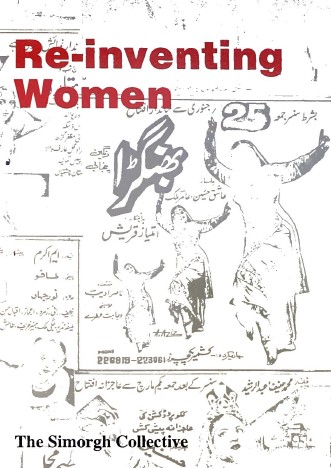
The Simorgh Collective’s Reinventing Women is a collection of essays that examines the representation of women in Pakistani media during the repressive regime of Zia-ul-Haq (1985-1986). The Simorgh Collective include Neelam Hussain, Nasrene Shah, Ferida Sher and Lala Rukh. It was edited by Maha Malik and Neelam Hussain. It explores how the state employs “Islamization” and mass manipulative strategies to propagate misogynist ethics and confining the identity of women to the domestic sphere. It also critiques the use of stereotypes that devalue women’s political agency, and also questions the use of the patriarchal lens for the female body. This results in increased social violence and vulnerability towards women. The methodology of the essay collection is rooted in the premise that gender roles are socially constructed as opposed to biologically fixed, and thus, subject to change. With the help of deconstructing television dramas, advertisements, films and school texts, the analysis reveals how media strengthens patriarchal norms and devalues women’s issues through stereotypes. Ultimately, Reinventing Women challenges socially constructed stereotypes and roles, advocating a discursive shift to dismantle patriarchy and reclaim female agency.
“Film” by Ferida Sher (pp. 43-65)
The chapter by Sher analyses the representation of women in Pakistani cinema during the Zia-ul-Haq era. It argues that films serve as ideological tools that project a patriarchal gaze. Consequently, it reduces the status of women as mere objects of desire and fantasy. Furthermore, there is no flexibility granted to female characters. They are simplified into binary stereotypes: the “virtuous” housewife or the “bad” immoral one. The analysis also highlights how films glorify self-sacrificing motherhood and domesticity while depreciating women’s rights and agency through elements of humour and violence. As a result, the medium, film, reinforces sexual hierarchies by portraying passive women needing male protection.
From a 21st-century feminist perspective, preserving this analysis is essential as it archives how state media was weaponized to dismantle female agency. It provides a vital blueprint for recognizing and resisting modern “patriarchal gazes” that continue to stereotype women in today’s digital and cinematic landscapes.
Community Comments