
About EWA
Editing Women in the Archives aims to locate, collate, conserve, and provide access to endangered women’s literary, lifestyle and art publications in Pakistan.
Supported by the Pakistan Association of Women Publishers and Editors (PAWPE) and the UK’s Teesside University, and funded via TU’s Impact Acceleration Account (IAA), the project targets women-edited publications at risk of being lost to memory and to history if interventions are not made to support their preservation. It facilitates access to these materials in digitized form. At the same time, it provides a space for researchers, creative practitioners, educators and others to share information and reflect on the challenges they face when attempting to undertake and sustain vital work on women’s archives.
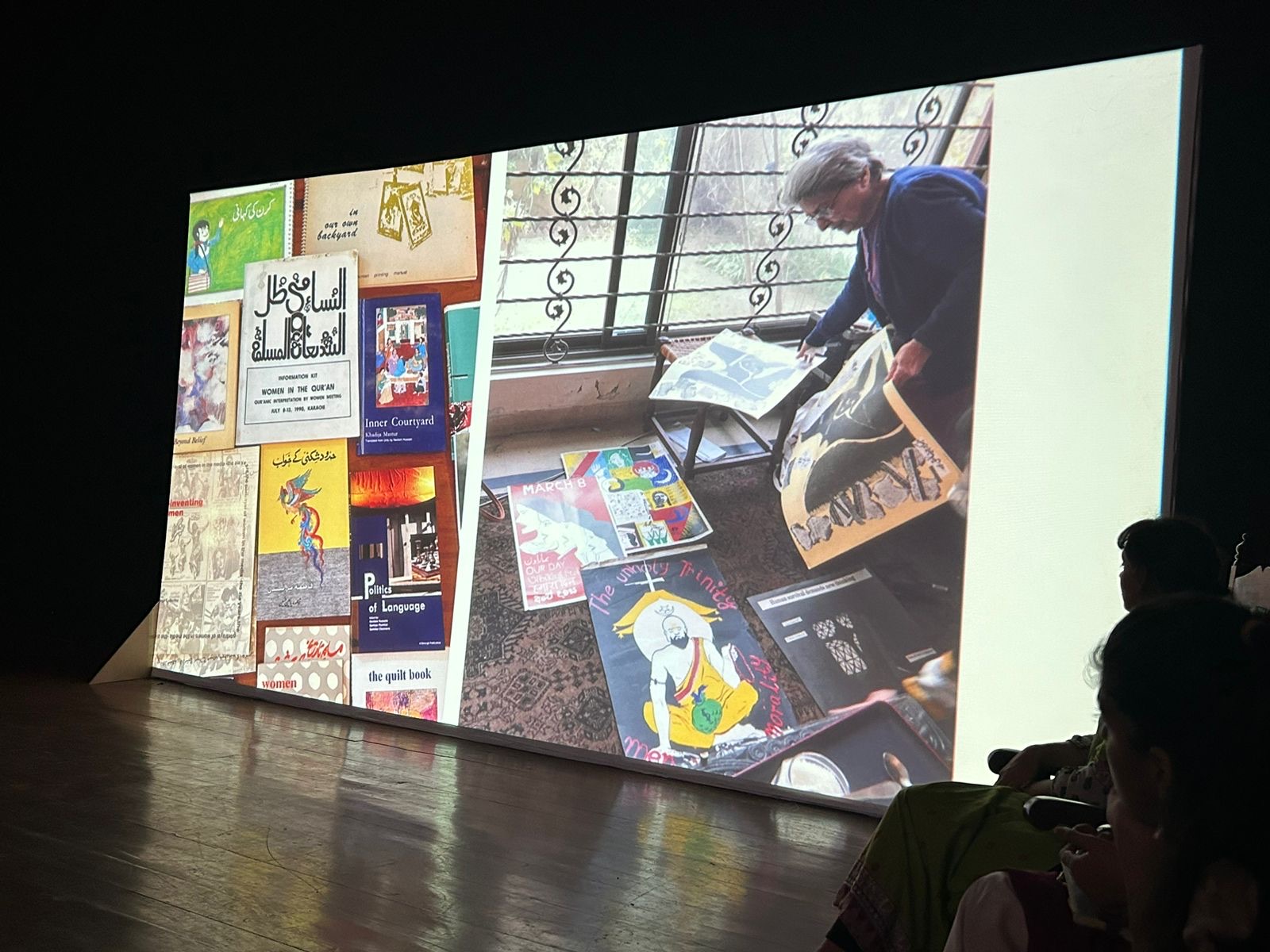
Brief History
Summary
The Editing Women in the Archives website and digital archive is an outcome of collaboration between the Pakistan Association of Women Publishers and Editors (PAWPE), and Teesside University, UK.
In spring 2024, four women with diverse backgrounds in writing, journalism, research, education, and creative practice: Hira Azmat, Tazeen Hussain, Mahnoor Jalal, and Veera Rustomji, worked with founding members of PAWPE – Niilofur Farrukh, Mehvash Amin, and Madeline Clements – to identify women-editing art, literary and lifestyle publications at risk of loss and in need of preservation. These included SHE: Journal for the Home and Paper magazines, NuktaArt, and a variety of books, reports and manuals published by the Simorgh Women’s Resource and Publications Centre in Lahore. The project resulted in two main outcomes: a Handbook available in print and digital form, sharing insights into the process of conducting the archival work and a snapshot of the research findings, and this archival website, through which digitised materials can be accessed.
The Editing Women In The Archives Team
Mehvash Amin
PROJECT LEAD
Mehvash Amin is publisher and editor in chief of The Aleph Review, a print art and literature journal with a concurrent website. Her publishing house, Broken Leg Publications, has currently published two works besides Aleph, of which there are eight volumes. She is a Pushcart-nominated poet whose works have appeared in various international journals and anthologies, and a member of The Taufiq Rafat Foundation, founded by the family of the Pakistani poet to perpetuate his legacy. She is also a member of PAWPE (Pakistan Association of Women Publishers and Editors).
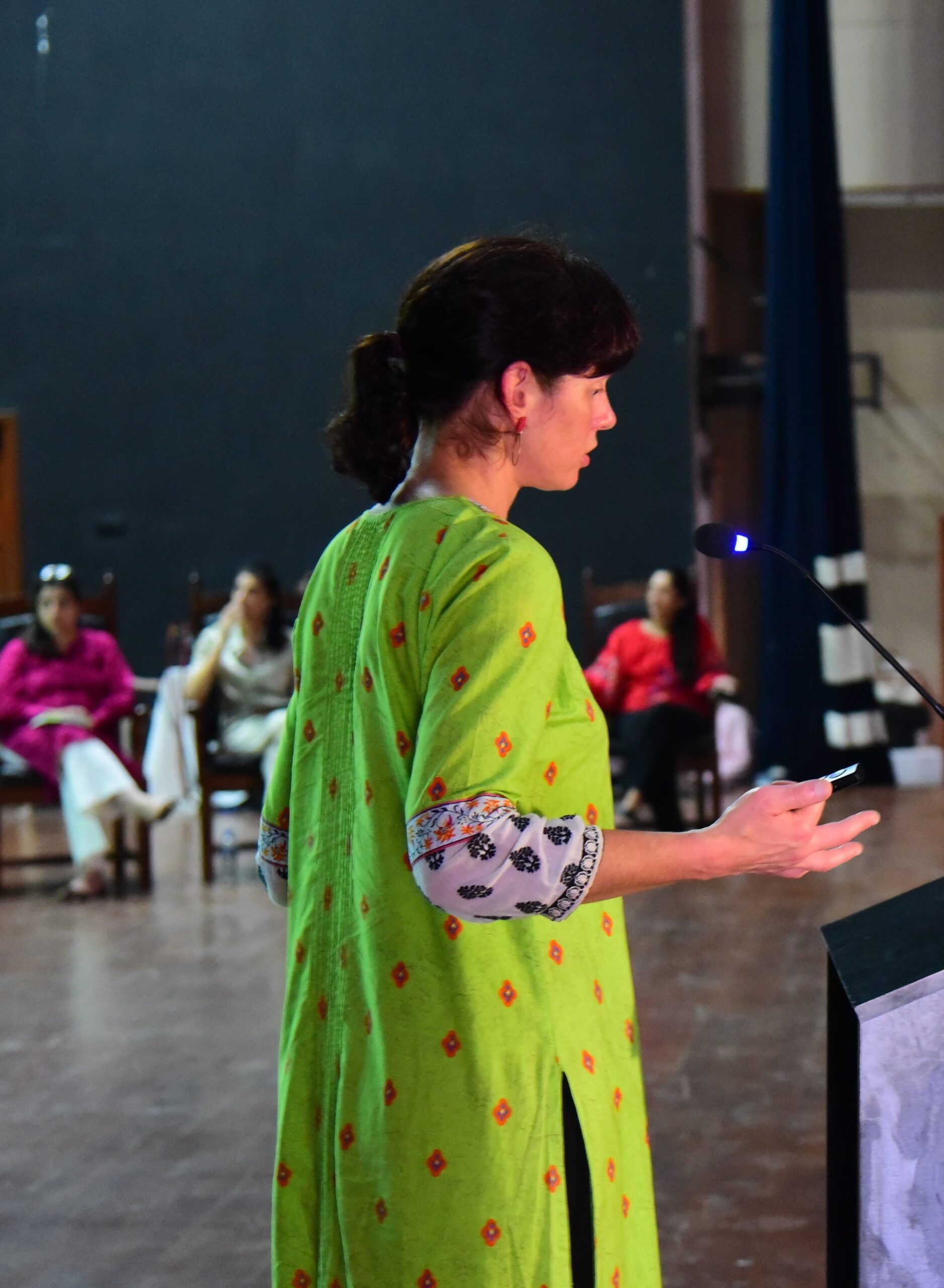
Madeline Clements
PROJECT LEAD
Madeline Clements is Senior Lecturer in English Studies at Teesside University, UK. Her research investigates the intersection of contemporary Pakistani cultural forms with questions of minority rights and representation. She is the author of Writing Islam from a South Asian Muslim Perspective (2015), and articles on contemporary visual art, life writing and fiction from Pakistan. She is currently Principal Investigator on the AHRC-funded research network World Making Words: Connecting women’s literary agency, activism and enterprise. In 2022, with Sadia Akhtar and Maham Khan, she organised the Editing Women workshop, which led to the foundation of PAWPE.
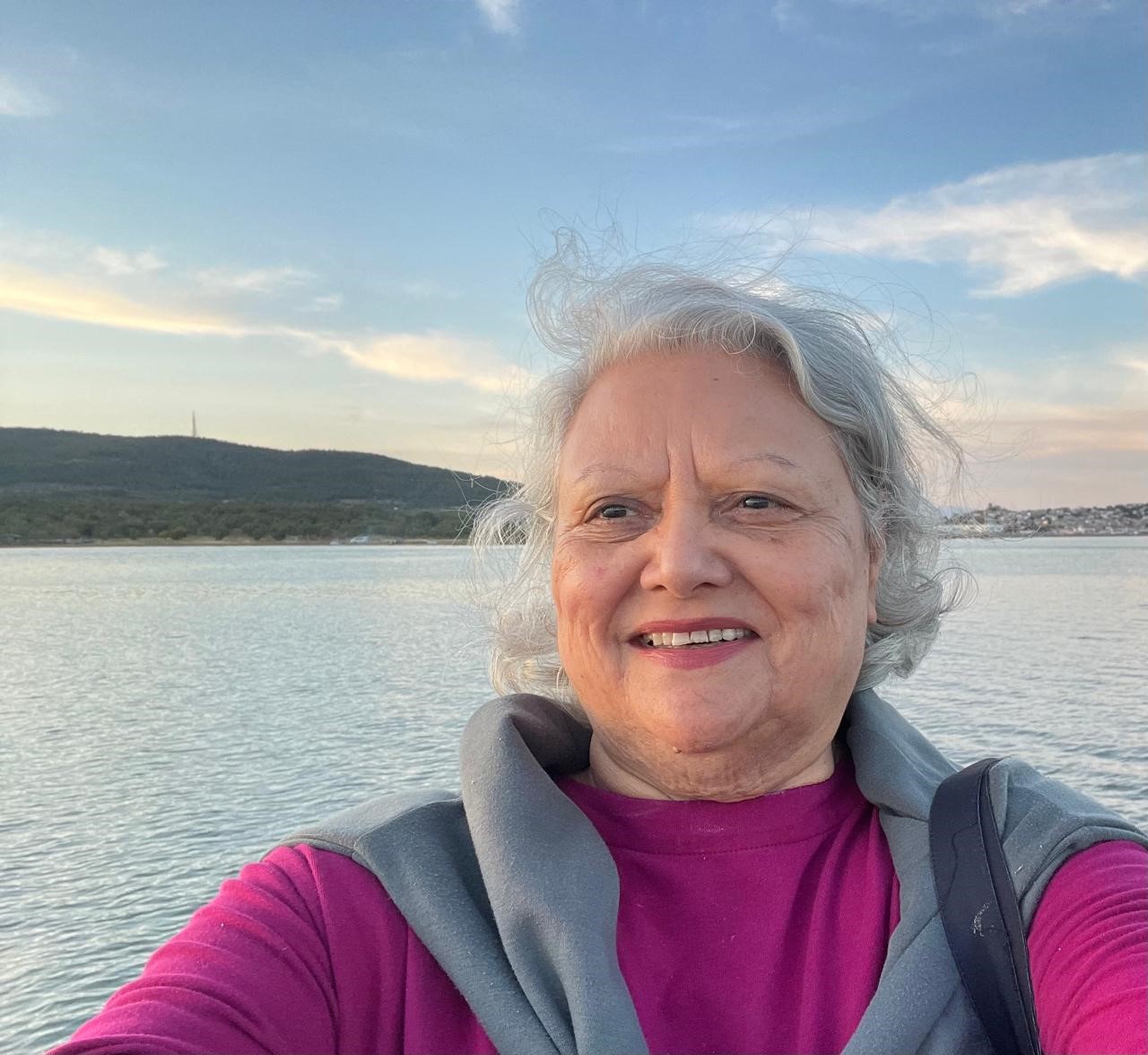
Niilofur Farrukh
PROJECT LEAD
Niilofur Farrukh is a Karachi-based art interventionist whose work has expanded the space for art publication, curation and public art in Pakistan. She has three books to her credit, the most recent being A Beautiful Despair: The Art and Life Of Meher Afroz . Niilofur co-founded NuktaArt, Pakistan’s Contemporary Art Magazine and was its founding editor for 10 years. She has served two terms as Vice-President on the Board of the International Art Critics Association and is the current chair of the Censorship Committee. In 2023, Niilofur joined the jury of the Shanghai-based International Public Art Prize. She is a Founder of Karachi Biennale Trust, has been its Managing Trustee since 2016, and is currently
CEO of Karachi Biennale.
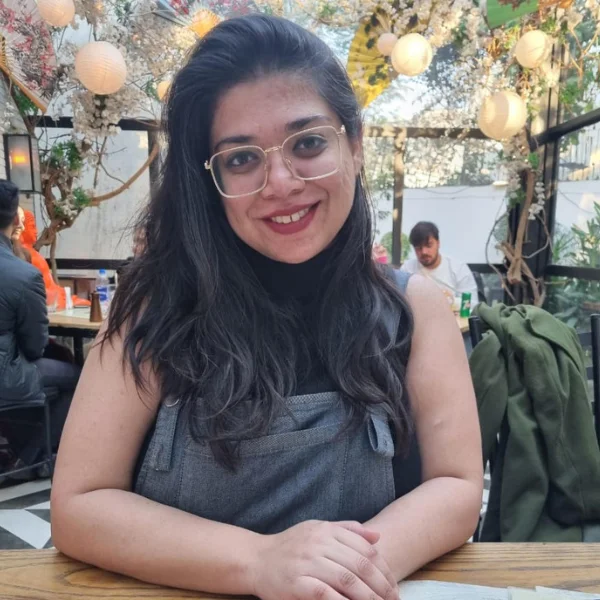
Hira Azmat
Project Researcher
Hira Azmat is a writer, editor, and a Pushcart Prize nominated poet. She has been working in the cultural industries in Pakistan for over a decade, as a curator of cultural spaces, and as an international arts manager. She is interested in arts and culture, movements and subcultures, literature and good design. She is currently working as Features Editor at Dunya Digital, Poetry Editor at SAAG, and as a freelance communications consultant.
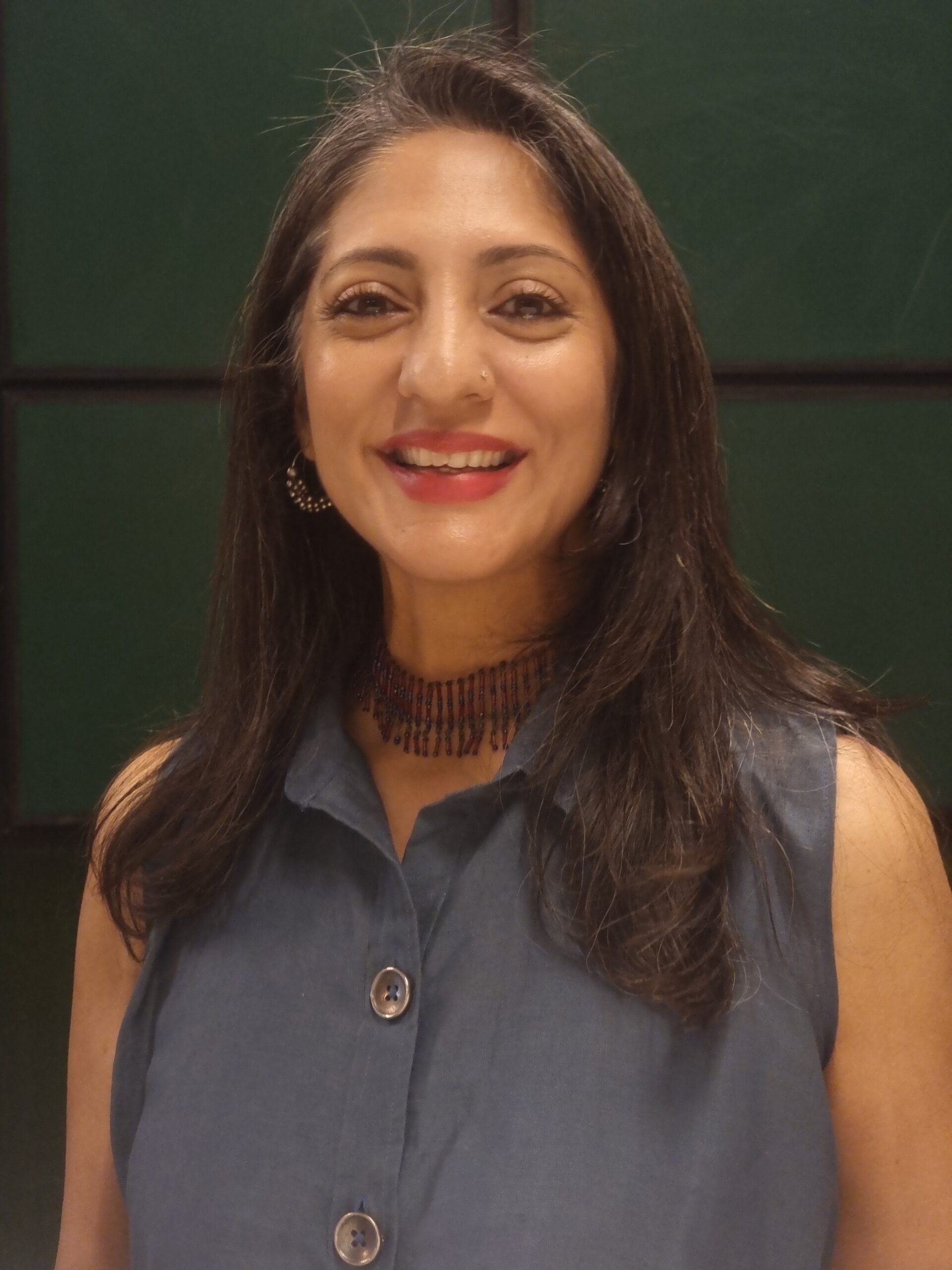
Tazeen Hussain
Project Researcher
Tazeen Hussain is an Associate Professor of Practice, Communication and Design, Habib University. Her interests include the re-examination of design education in relation to its socio-political impact, environment, and sustainability in Pakistan. Her projects include Critical Design Education and Practice, funded by US-Pakistan University Partnerships Grants Program with IVS; Karachi Art Directory with Karachi Biennale Trust; and Imparting education on Climate Change to vulnerable communities, funded by UN GRIP with Indus Earth Trust. She is a founder member of The Karachi Collective and has published her research nationally and internationally. In addition, Tazeen is Chair of Design, ADA Awards (4th cycle), Advisory Board member, Gandhara Film Festival and on the Board of Studies for design institutions across Pakistan. She also works as an actor and voiceover artist.
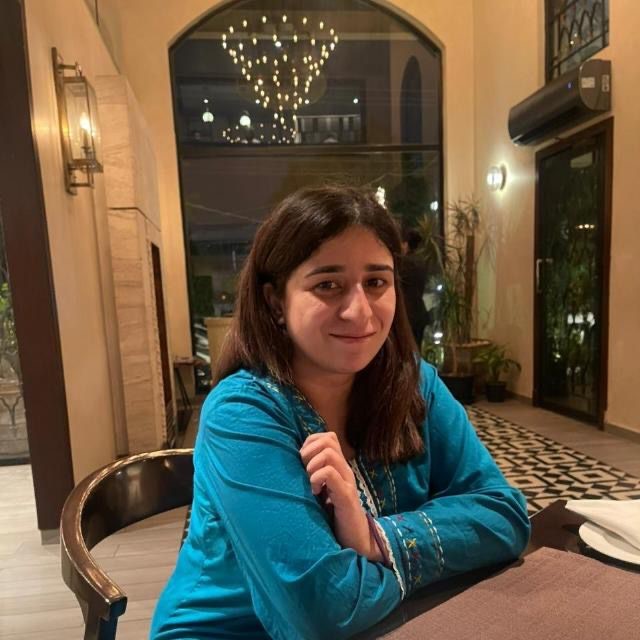
Mahnoor Jalal
Project Researcher
Mahnoor Jalal is a researcher, journalist, and social media strategist from Lahore. She holds a BA degree in Liberal Arts from Beaconhouse National University (BNU). She has been working with some of the leading digital platforms for the past four years such as The Current, and Niche Lifestyle, where she covered various topics ranging from human rights causes and gender-based violence to culture and education. Her research interests focus on feminist revolutions, media censorship, queer theory, and South Asian history.
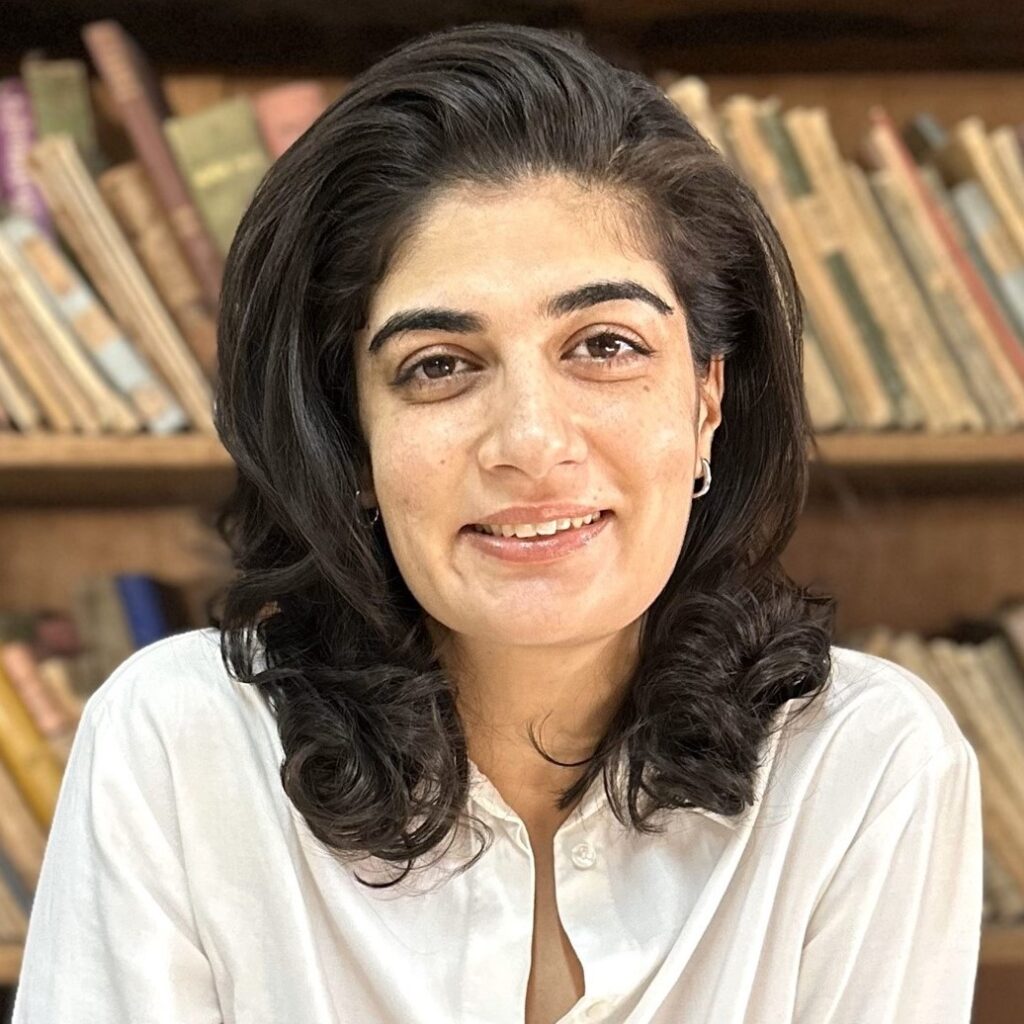
Veera Rustomji
Project Researcher
Veera Rustomji is a Karachi-based artist. She holds a BFA from the Indus Valley School of Art and Architecture (IVS) and an MA in Fine Art from Chelsea College of Arts, University of the Arts, London. Her practice takes reference from stories and archives creating scenarios that deal with gender, geographical power structures and religious iconography. Veera has extensively researched the multidimensional nature of Zoroastrian migration stories, comparing them with archaeological studies. She has been the recipient of the UAL Postgraduate International Scholarship Award (2019) and Mead Fellowship (2021-2022), and collaborated with the Citizens Archive of Pakistan, the Maritime Archaeology and Heritage Institute, Karachi Biennale Trust, and Vasl Artists’ Association. Veera teaches at IVS and is co-director of the Urban Repository Archive housed at its Fine Art Department and supported by Art South Asia Project.
About PAWPE
The Pakistan Association for Women Editors (PAWPE) is a collective of women editors, publishers, writers, artists and researchers. It was founded in 2022 following the Editing Women Workshop at the Last Word Bookshop with a view to supporting the independent literary landscape in Pakistan. PAWPE aims to find sustainable solutions so magazines and publishing houses can continue to operate while maintaining financial and aesthetic autonomy.
Teesside University Impact
Acceleration Account
IAA funding has been transformational for TU research and the communities it serves, providing impact, commercialization, and media training to staff and community partners and participants, and enabling the pursuit of an ambitious trajectory of action oriented and engaged research. TU is committed to working with stakeholders in hard-to-reach and marginalized communities; with regional and national bodies; and to developing international networks. The IAA has worked closely with partners and beneficiaries to promote the benefits of arts and humanities research and to produce a portfolio of outcomes including frameworks, toolkits, and bespoke evaluation methodologies.